Sunday, April 17, 2016

TOW #24 - "Were those the days, my friends?"

     Before the last symposium, I was getting ready to read the texts I was assigned when I found out that Barracuda blocks the online textbook. I’ve never been able to access the online textbook on my personal computer because it says I don’t have an access code, so I used the resources that I had and found a whole bunch of links about gender, the topic I was assigned, provided by the site that has the textbook. I thought these were the texts, so I read the first couple. Instead of being sad that I wasted my time, I turned it into a TOW! I feel very creative.
     One of the articles I read was written by Elaine Morgan, a prominent feminist in the 60s and 70s. She writes about what went wrong with the feminist movement when she was young, arguing that, although women have ultimately become more equal, we do not live in the utopian world that she expected back then.
     I definitely agree with Elaine’s argument. Although there have been many improvements, there is still room to improve, and new problems have been created. Let’s begin with the improvements. Women are definitely better off than before. They are more independent socially, politically, and economically. Socially, women are now allowed to be their own person and don’t have to be the obedient wife. Politically, they have gained voting rights and rights to own property, and they have become political leaders. Economically, women can financially support themselves and are no longer constrained to making coffee and looking pretty. However, gender role still exist, we have yet to have a female president, and women still don’t have totally equal pay. We’re on the way to solving these problems, but we’ve created new ones by doing so. For example, women don’t really have the freedom to choose to work anymore. Now, women must work in order to support themselves. However, they still are mostly tasked with raising children, which costs money. They now have to carry the added weight of not only caring for the children but paying for the children. Morgan argues that this means we should have higher family allowances, but I disagree. In a perfect world it would be nice, but this would be very difficult to put into effect in the US. The reason it works so well in Scandinavian countries is that the population is more homogenous. In the US, there are too many people that see others as, well, “other,” and won’t like the idea of helping them.

Sunday, April 10, 2016

TOW #23 - Visual Text

     The babies depicted in this image is covered with logos of various prevalent companies in today’s culture. The maker of this image is most likely arguing that we are influenced by the media and advertisements around us now more so than ever, even from the moment we are born. In this way, today’s kids are more products of advertising and the media than ever before.
     This claim definitely applies to many aspects of today’s world. Nowadays, all you have to do to keep a kid busy is give them an iPad. With the Internet at their fingertips, they are now so much more connected to the rest of the world than we were at their age. Although they have more resources, they are also exposed to the media and commercials more often. In this way, they are molded by and made a product of the media from a very young age.
     For example, my younger sisters got their first iPhones in elementary school, while I got mine in eighth grade. Today, they are so much more in touch with pop culture than I am. My youngest sister is obsessed with Snapchat, Instagram, and Musical.ly. Whenever she’s bored and standing around waiting, she whips and nae naes. It’s kind of embarrassing that she knows more about pop culture than her teenage sister, but it makes sense since she’s been using her iPhone from such a young age.
     However, this does not apply to all people of the world. There are still many people without access to advanced technology or Internet. Although the picture makes a great statement about developed countries like the one we live in, not everybody can relate to it.
     Overall, the maker of the image’s claim that today’s kids are exposed to technology and the media at a very young age and that this exposure makes them a product of pop culture has merit but cannot be applied to the entire younger generation since there are still many people without access to technology that we have so readily.

Sunday, April 3, 2016

TOW #22 - FEC Implements One-Year Break Between All Presidential Terms As Reprieve For Weary Nation

It’s been too long since I’ve read some nice satire, and the Onion is the perfect place to refresh my memory. This article discusses a new one-year break between presidential terms implemented by the Federal Election Committee (FEC) in order to give citizens a break between the drama that surrounds a presidency. Of course, the nature of satire is to ridicule, in this case the US presidential elections, so it is not necessary for the report to be true. I could not find the author of this article, but the author and his or her credibility is not important in this situation because any informed reader would know that the information is inaccurate and heavily exaggerated to create a humorous effect. However, the author does create a sort of “ethos” by citing official organizations, like the FEC, and leaders of those organizations, like FEC chair Ann M. Ravel. As aforementioned, the reader of this article would have to be well informed on how the US government works as well as smart enough to understand that waiting a year between presidencies is completely out of the question because it would leave the world superpower without a leader. To further ridicule and make the article funnier, the author adds quotes from citizens reacting to the “change” made by the FEC. For example, alleged Columbus, OH resident Caroline Helling says, “Seeing all these TV and newspaper reports about whatever the current president just did or might do, hearing months and months of speculation about whether some guy’s gonna run or not—it will be the most amazing thing in the world to have a break from all that. I would love, absolutely love, to stop hearing a candidate’s sound bite on loop in the media, then hearing the other side overreacting and denouncing the sound bite, then seeing all the thinkpieces that come out about the overreaction, then having to go through the same shit all over again the next day.” This appeals to the author’s “ethos” by supporting his earlier statements and “logos” by providing a logical argument for keeping the breaks.

Sunday, March 13, 2016

TOW #21 - Lin-Manuel Miranda is Awesome

     Puerto Rican Lin-Manuel Miranda, writer for a Broadway show that is sold-out for months in advance, amazing rapper and freestyler, is possibly one of the coolest people ever. In honor of his awesomeness, I’ve decided to read an article about this show. In his article, The Case for Hamilton as Album of the Year, Spencer Kornhaber pulls quotes from songs and compares Lin Miranda, the lead and writer of Hamilton, to other artists in order to argue for Hamilton as the album of the year by rhetorically analyzing it.
     Like any good piece of rhetorical analysis, quotes are absolutely necessary. He writes, “it probably took a month alone to figure out the right phrase to rhyme with ‘revolutionary manumission abolitionists.’ ” By implementing quotes into his writing as shown, he allows the reader to make decisions for themselves and see first-hand how Miranda used certain techniques to create certain effects. In this way, he can show the reader the intricacies of Miranda’s writing and musical technique, proving Hamilton to be the best album of the year.
     Kornhaber also includes comparisons to other artists, including hip-hop artists like Kendrick Lamar and Drake. He writes, “You can find this Hamiltonian idea of hip-hop refracted through rap’s other great works this year. You hear it in the verbosity, the craft, the daringness, the desperate idealism, and the death-obsessed drive of Kendrick Lamar’s To Pimp a Butterfly. You hear Hamilton’s obsession with legacy, his unwillingness to back down when challenged, his profligacy—’why do you write as if you’re running out of time?’—in Drake’s multi-mixtape 2015 output.” In this way, Kornhaber proves the validity of rap as an expressive tool in musical theater, perhaps even more effective than just singing. This is seen in the song “Farmer Refuted,” in which “Hamilton tears Samuel Seabury’s words apart by literally speaking between them—basically, it’s Miranda proving the supremacy of rap as a form of expression.” Kornhaber argues that even though Miranda’s use of rap is unconventional, it’s wholly effective in musical theater.
     Kornhaber’s direct quotes from Miranda’s song and comparison of Miranda’s songs and other artist’s songs allows him to successfully rhetorically analyze Hamilton all while supporting his argument that Hamilton should be lauded as the album of the year. In this rather rare piece of rhetorical analysis in the “wild,” Kornhaber has made me even more excited to go see the show in New York!

Sunday, March 6, 2016

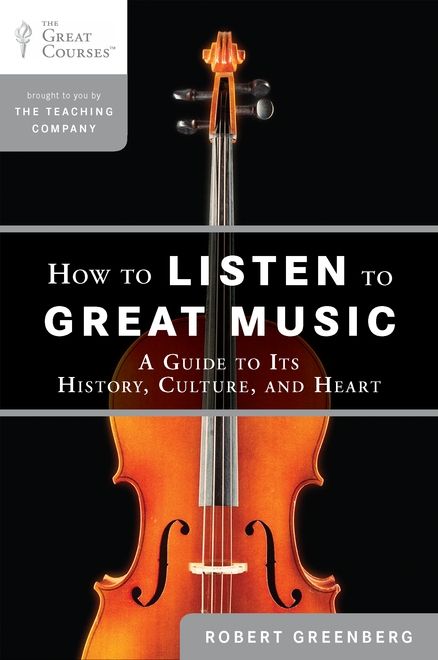
TOW #20 - How to Listen to Great Music (IRB)

      How to Listen to Great Music: A Guide to its History, Culture, and Heart by Robert Greenberg has been a great read--and listen--so far! As I mentioned in my intro post, the book goes along with a lecture on Audible.com that I’m listening to with my dad because how can you learn how to listen to great music if you don’t hear any music? I started listening to the lecture way before I started reading the book, but I’m now ahead in the book because my dad and I don’t have a lot of time to listen to the lecture. Either way, it’s been interesting to hear how similar Greenberg’s speaking and writing styles are. In his book, Greenberg writes how he speaks and uses an extended joke about a gerbil in order to help the reader understand just enough music theory to appreciate the complexities of great music.
As soon as Greenberg opens his mouth, or puts a pen to the page (or is it finger to the keyboard?), his style is obvious: expressive, passionate, flowery, casual, and again passionate. Obviously, Greenberg really likes, and knows, what he’s talking about. On page 1, he writes “Music is an intensification, a crystallization, a celebration, a glorification, of that movement and those vibrations. Pretty heady stuff.” One can almost hear the crescendo of his voice as the list of nouns goes on in the rather formal and flowery first sentence. Then in the next sentence, which is really just a fragment, he drops the formal tone in order to better relate to the audience. He then continues: “one need not speak Ashanti in order to groove to West African drumming; or German in order to be emotionally flayed by Beethoven; or English to totally freak when listening to Bruce Springsteen. Say it with flowers? Nah. If you really want to get your expressive point across, say it with music.” His diction in this section, using words like “totally freak” and “nah,” show his casual style, which in turn makes him more relatable and credible in the audience’s eyes as he’s just one of us. This relaxed style allows the audience to in turn relax around the author, making it easier to explain harder technical concepts to an audience that doesn’t know much about music.
Greenberg’s gerbil jokes also add to his relatability while simultaneously explaining or exemplifying a difficult technical concept. On page 14 he writes, “Try it at home! Sing in the shower. Your unaccompanied voice is singing in a monophonic texture. Having left the shower, grab your wife or husband, partner, children, cat, or gerbil (okay, maybe not the cat), and sing the same thing together. Despite the fact that there is more than one voice singing, the voices are singing the same single, unaccompanied melody at the same time. It’s still monophony.” This is the first time the gerbil character appears in this book, and it keeps the book light and funny while explaining the rather boring and technical concept of monophonic music. The gerbil joke comes up again and again while explaining types of polyphony and homophony. This method of keeping the book interesting while teaching has time and time proved itself to be very effective.
Overall, Greenberg’s How to Listen to Great Music: A Guide to its History, Culture, and Heart is a great read--and listen!--as the author writes colloquially and makes education fun through jokes in order to teach a wide audience of people how to listen to great music in an easily understandable way. Not only is Greenberg’s prose and writing style fun and unique--something that I want to emulate using my own personality in my own writing--but his book has also exposed me to a lot of great and interesting music and is a must-read for anyone into history and/or music!

Sunday, February 28, 2016

TOW #19 - “Hollywood Needs to Fix Itself”

     In lieu of the Oscars tonight, I’ve decided to write my TOW about one. Recently, many people have been upset over the fact that the Oscars are white-dominated. Most people blame the fact that most Academy members are white and male, and the author agrees. However, the author, Slate writer Aisha Harris, argues that the problem is not just in the Academy members but in the Hollywood industry itself, which I agree with. The real problem is the issue of diversity in the entertainment industry, not just within the awards.
     Harris writes, “How many nonwhite and/or female studio execs are deciding which projects deserve to be greenlit? How many talented up and coming writers and directors of color are being sought after and mentored by more established directors, writers and producers? Where are the adventurous casting agents who don’t automatically assume that a character written of nonspecified background has to be white?” Here, Harris is getting to the root of the matter. Of course awards are going to reflect the industry, so in order to have more diverse awards ceremonies (that are still fair), there needs to be a change at the root of the matter. It’s not enough to just change the surface of the problem.
     Just making the members of the Academy more diverse is like affirmative action. It may change the end results (like who wins and who gets accepted), but it doesn’t actually address the root of the problem. The film industry will still be white dominated, and there is still an education and economic gap. It’s much more difficult to fix the root of the problem, but that’s what needs to be done in order to make a difference in the world.

Sunday, February 21, 2016

TOW #18 - The Joy of Psyching Myself Out

     This week, I've decided to read an editorial piece published by the New York Times called "The Joy of Psyching Myself Out". The author, Maria Konnikova, is an ex-psychologist turned author. In her piece, she discusses the underlying misconceptions behind writing and the scientific pursuit of the mind and how, despite their differences, they both require exact-ivity and creativity. Additionally, separating the creativity from the world of physiology is not only unwarranted but also downright destructive. To emulate this, Konnikova utilizes concrete examples and employs parallel structure to add factual support and a sense of convictions and passion.

     In order to make the argument that the freedom to explore is crucial to scientific discovery, Konnikova talks about the revolutionary psychoanalysis Sigmund Frued. She first gives background on his methods of studying and researching- and how he relies on creativity to come up with his hypothesis. Because of his willingness to think abstractly, he was able to achieve success. This creativity made him  “a breed of psychologist that hardly exists anymore: someone who saw the world as both writer and psychologist, and for whom there was no conflict between the two.” That boundary melding allowed him to posit the existence of cognitive mechanisms that wouldn’t be empirically proved for decades.

     Konnikova also utilizes parallel structure to end the editorial on a powerful note. At the end, she refers to the reasons why she left the field of phycology; saying, “ I left psychology behind because I found its structural demands overly hampering…most new inquiries never happened — in a sense, it meant that objectivity was more an ideal than a reality. Each study was selected for a reason other than intrinsic interest.” Then, immediately following this claim, she declares, “I became a writer to pursue that intrinsic interest. But I do so having never quite left the thinking of the psychologist behind” and foes onto talk about the merits. This structure revolving around the word intrinsic interest and the comparison of pros and cons leaves the reader with an underlying feeling of torn interest. It is up to them to derive their own opinion through the information presented oh so jumbled and befuddled by Konnnikova.

Monday, February 15, 2016

TOW #17 - Logo Baby (visual)


     The baby depicted in this image is covered with logos of various prevalent companies in today’s culture. The maker of this image (uncredited) is most likely arguing that we are influenced by the media and advertisements around us now more so than ever, even from the moment we are born. In this way, today’s kids are more products of advertising and the media than ever before.
     This claim definitely applies to many aspects of today’s world. Nowadays, all you have to do to keep a kid busy is give them an iPad. With the Internet at their fingertips, they are now so much more connected to the rest of the world than we were at their age. Although they have more resources, they are also exposed to the media and commercials more often. In this way, they are molded by and made a product of the media from a very young age.
     For example, my younger sisters got their first iPhones in elementary school, while I got mine in eighth grade. Today, they are so much more in touch with pop culture than I am. My youngest sister is obsessed with Snapchat, Instagram, and Musical.ly. Whenever she’s bored and standing around waiting, she whips and nae naes. It’s kind of embarrassing that she knows more about pop culture than her teenage sister, but it makes sense since she’s been using her iPhone from such a young age.
     However, this does not apply to all people of the world. There are still many people without access to advanced technology or Internet. Although the picture makes a great statement about developed countries like the one we live in, not everybody can relate to it.
     Overall, the maker of the image’s claim that today’s kids are exposed to technology and the media at a very young age and that this exposure makes them a product of pop culture has merit but cannot be applied to the entire younger generation since there are still many people without access to technology that we have so readily.

Sunday, January 31, 2016

IRB Intro Post #3

     This marking period I’m reading another book that’s connected to one of my dad’s audiobooks. However, I’ve mixed it up a bit by choosing to read a science book. I’ve decided to read Maps of Time: An Introduction to Big History by David Christian. I can’t wait to get started!

Monday, January 18, 2016

TOW #15 - The Lorraine Motel and Martin Luther King

     I read this article in the spirit of MLK day, the reason we don’t have school today. In this article Allyson Hobbs writes about the motel in which Martin Luther King Jr. was assassinated, the Lorraine Motel. In order to effectively describe its history in a moving way, Hobbs uses descriptive language and quotes from people who stayed at the motel in its heyday.
     When describing the Lorraine today, Hobbs writes, “The large motel sign features “Lorraine” printed in a dramatic script against a bright yellow background, and ‘Motel’ is written in large red block letters, each letter stamped inside its own white circle. A large white wreath hangs on the balcony outside Room 306, to memorialize the spot where King stood at the time of the assassination. Standing in front of the motel transports visitors to a bygone era. If you close your eyes, the iconic photograph of King’s friends pointing off into the distance, at the place from which they believed the shot was fired, comes into sharp view.” Instead of just telling the reader that seeing the motel is like looking at another era, she shows us by painting the picture. This allows the audience to become more immersed in the story and the scene and better understand what the Lorraine is like today.
     In order to help readers understand the Lorraine of the past, Hobbs uses quotes from people who stayed there. She writes, “As Isaac Hayes reminisced, ‘We’d go down to the Lorraine Motel and we’d lay by the pool and Mr. Bailey would bring us fried chicken and we’d eat ice cream. . . . We’d just frolic until the sun goes down and [then] we’d go back to work.’” This helps readers much as the description does, but since Hobbs mostly likely wasn’t at the Lorraine around the time it was in its heyday, she has to rely on other people’s descriptions. These descriptions still have the same effect as hers.
     In order to describe this important historical motel, Hobbs uses descriptive language and quotes. Today, the Lorraine is no longer a motel. Instead, it’s been converted into a civil rights museum. The room that MLK stayed in when he was assassinated, Room 306, still stands today for visitors to gaze at.
Martin Luther King, Jr., lies at the feet of civil-rights activists pointing in the direction of his assassin. The Lorraine Motel, where King was murdered, later became a civil-rights museum.CREDIT PHOTOGRAPH BY JOSEPH LOUW / THE LIFE IMAGES COLLECTION / GETTY

Sunday, January 10, 2016

TOW #14 - Free People Commercial


About two years ago, a clothing brand called Free People released a commercial for its new dancewear line. While unnoticeable to the untrained eye, it is obvious to any dancer that the actress who claims to have been dancing since she was 3 has no formal training in pointe what-so-ever. Although overall ineffective because of this one giant mistake, Free People’s commercial does have some redeeming qualities: the cadence of the voiceover follows the movements, and the camera crew strategically blurred obviously bad blunders of the “ballerina.”
The commercial starts with the girl says, “I don’t even think about it at this point; I just express myself and I let myself go and it’s not really--I don’t think about what I’m gonna do I just do it?” This sentence, while grammatically incorrect and redundant, move and flows just like the “dancer” and the music do. This adds to the effect of movement, which is the desired effect for the brand’s movement theme. Unfortunately the actual content of the actress’s statement is atrocious. While this would be okay to say for almost every other style of dance, it is not okay for ballet. When a ballerina dances, she is always thinking; if she doesn’t she falls and gets hurt.
However, someone along the way of the product of this video must’ve known how untrained in pointe this actress was. At 1:12 there is a strategically blurred clip in which the “dancer” attempts a step that she obviously looks bad doing. While covering one of her bigger blunders is a plus, this person on the production team wasn’t versed enough in ballet to be able to cover all the rest of the dancer’s mistakes.

Overall, Free People tried very hard to fool people into thinking they hired a trained ballet dancer but failed miserably. On the off chance that the actress really was a trained dancer in a different style of dance, the brand should’ve showed off her strengths. Either way, the commercial had the opposite of the desired effects. I know I’m definitely not buying any clothes from a store that hires fake ballerinas that make ballet seem easy.

Sunday, December 20, 2015

TOW #13 - The Case for 'Hamilton' as Album of the Year

Hamilton Poster

     I got an early Christmas present this weekend: tickets to see Hamilton! Actually, it was more an overly obvious hint but TICKETS TO SEE HAMILTON, a Broadway show that is sold-out for months in advance! So, in honor of this awesome surprise, I’ve decided to read an article about this show. In his article, The Case for Hamilton as Album of the Year, Spencer Kornhaber pulls quotes from songs and compares Lin Miranda, the lead and writer of Hamilton, to other artists in order to argue for Hamilton as the album of the year by rhetorically analyzing it.
     Like any good piece of rhetorical analysis, quotes are absolutely necessary. He writes, “it probably took a month alone to figure out the right phrase to rhyme with 'revolutionary manumission abolitionists.' ” By implementing quotes into his writing as shown, he allows the reader to make decisions for themselves and see first-hand how Miranda used certain techniques to create certain effects. In this way, he can show the reader the intricacies of Miranda’s writing and musical technique, proving Hamilton to be the best album of the year.
     Kornhaber also includes comparisons to other artists, including hip-hop artists like Kendrick Lamar and Drake. He writes, “You can find this Hamiltonian idea of hip-hop refracted through rap’s other great works this year. You hear it in the verbosity, the craft, the daringness, the desperate idealism, and the death-obsessed drive of Kendrick Lamar’s To Pimp a Butterfly. You hear Hamilton’s obsession with legacy, his unwillingness to back down when challenged, his profligacy—'why do you write as if you’re running out of time?'—in Drake’s multi-mixtape 2015 output.” In this way, Kornhaber proves the validity of rap as an expressive tool in musical theater, perhaps even more effective than just singing. This is seen in the song “Farmer Refuted,” in which “Hamilton tears Samuel Seabury’s words apart by literally speaking between them—basically, it’s Miranda proving the supremacy of rap as a form of expression.” Kornhaber argues that even though Miranda’s use of rap is unconventional, it’s wholly effective in musical theater.
     Kornhaber’s direct quotes from Miranda’s song and comparison of Miranda’s songs and other artist’s songs allows him to successfully rhetorically analyze Hamilton all while supporting his argument that Hamilton should be lauded as the album of the year. In this rather rare piece of rhetorical analysis in the “wild,” Kornhaber has made me even more excited to go see the show in New York!

Sunday, December 13, 2015

TOW #12 - How to Listen to Great Music (IRB)

     How to Listen to Great Music: A Guide to its History, Culture, and Heart by Robert Greenberg has been a great read--and listen--so far! As I mentioned in my intro post, the book goes along with a lecture on Audible.com that I’m listening to with my dad because how can you learn how to listen to great music if you don’t hear any music? I started listening to the lecture way before I started reading the book, but I’m now ahead in the book because my dad and I don’t have a lot of time to listen to the lecture. Either way, it’s been interesting to hear how similar Greenberg’s speaking and writing styles are. In his book, Greenberg writes how he speaks and uses an extended joke about a gerbil in order to help the reader understand just enough music theory to appreciate the complexities of great music.
     As soon as Greenberg opens his mouth, or puts a pen to the page (or is it finger to the keyboard?), his style is obvious: expressive, passionate, flowery, casual, and again passionate. Obviously, Greenberg really likes, and knows, what he’s talking about. On page 1, he writes “Music is an intensification, a crystallization, a celebration, a glorification, of that movement and those vibrations. Pretty heady stuff.” One can almost hear the crescendo of his voice as the list of nouns goes on in the rather formal and flowery first sentence. Then in the next sentence, which is really just a fragment, he drops the formal tone in order to better relate to the audience. He then continues: “one need not speak Ashanti in order to groove to West African drumming; or German in order to be emotionally flayed by Beethoven; or English to totally freak when listening to Bruce Springsteen. Say it with flowers? Nah. If you really want to get your expressive point across, say it with music.” His diction in this section, using words like “totally freak” and “nah,” show his casual style, which in turn makes him more relatable and credible in the audience’s eyes as he’s just one of us. This relaxed style allows the audience to in turn relax around the author, making it easier to explain harder technical concepts to an audience that doesn’t know much about music.
     Greenberg’s gerbil jokes also add to his relatability while simultaneously explaining or exemplifying a difficult technical concept. On page 14 he writes, “Try it at home! Sing in the shower. Your unaccompanied voice is singing in a monophonic texture. Having left the shower, grab your wife or husband, partner, children, cat, or gerbil (okay, maybe not the cat), and sing the same thing together. Despite the fact that there is more than one voice singing, the voices are singing the same single, unaccompanied melody at the same time. It’s still monophony.” This is the first time the gerbil character appears in this book, and it keeps the book light and funny while explaining the rather boring and technical concept of monophonic music. The gerbil joke comes up again and again while explaining types of polyphony and homophony. This method of keeping the book interesting while teaching has time and time proved itself to be very effective.
Singing Gerbil - Yuval Y
     Overall, Greenberg’s How to Listen to Great Music: A Guide to its History, Culture, and Heart is a great read--and listen!--as the author writes colloquially and makes education fun through jokes in order to teach a wide audience of people how to listen to great music in an easily understandable way. Not only is Greenberg’s prose and writing style fun and unique--something that I want to emulate using my own personality in my own writing--but his book has also exposed me to a lot of great and interesting music and is a must-read for anyone into history and/or music!

Sunday, December 6, 2015

TOW #11 - Black Guy Asks Nation For Change

    In light of the coming election and the end of the Obama administration, I have decided to take a look back at his 2008 campaign. Besides, it has been way too long since I have analyzed satire. In “Black Guy Asks Nation For Change” from the Onion, the author uses a humorous homonym and an obvious understatement in order to ridicule Americans that do not pay attention to politics by satirizing people’s view of Obama’s campaign.
     The most blatantly obvious and funniest strategy used to satirize is how the author takes advantage of the multiple meanings of the word “change.” An integral part of Obama’s campaign, here the word means “the act or instance of making or becoming different,” whereas in the Onion article the author uses the sense of the word that means “coins as opposed to paper currency.” The way the author takes advantage of this homonym allows him to make the article humorous and funny by making fun of the Americans that do not pay attention to politics and therefore do not understand Obama’s campaign.
     The author of “Black Guy Asks Nation For Change” also implements an understatement in order to mock those that do not pay attention to the news and politics. As seen in the title of the article, the author repeatedly calls Obama “the black guy” and “the black man.” This understatement exemplifies how out of the loop and blatantly ignorant some Americans are, since they do not even know who Obama is. By satirizing this ignorantness, the author achieves the effects of humor and therefore exposes the absurdity of those who do not know what is going on in the world.
     In “Black Guy Asks Nation for Change” from the Onion, the author of this article uses a funny homonym and a clear understatement in order to mock those who are out of the loop and do not pay attention to important things, like presidential elections, by satirizing the public’s reception of Obama’s 2008 campaign centered around “change.” This Onion article, an oldie but a goodie, has made this week’s TOW fun and educational! Nice one Onion, you did it again. :)
"The black guy is oddly comfortable demanding change from people he's never even met." - The Onion

Sunday, November 22, 2015

TOW #10 - Paris’s Longest Night

     I’d like to apologize in advance for picking two TOW’s in a row on the same topic. I’ll try to justify it by saying that I’d like my TOW’s to reflect on what’s happening in the real world, and the ISIS attacks, especially the one on Paris, have been all over the news. This article from The New Yorker, written by Alexandra Schwartz, cleverly uses impactful imagery and quotes from people who actually were at the site of the attacks in order to show the reader what it really is like to be in France and French at this moment.
     It is immediately apparent that Schwartz is telling stories almost as soon as you start reading the article. Her imagery and descriptive language immerses the reader into the story, making him or her feel like he or she is really there. In her second paragraph, Schwartz describes Matthieu’s experience on that fateful night. “A car screeched to a stop a few feet from where Matthieu was sitting and a man jumped out, firing a Kalashnikov. For a moment, Matthieu thought he was watching a private settling of scores. Then the man fired a second burst; there was a tremendous shattering of windows and bottles. Matthieu leapt over the table and started running. At the top of the street, he stopped and listened. It was only then that he realized that a bullet had lodged in his left hand. His pinkie and ring fingers hung at a crooked angle.” Upon reading this, one can almost feel the surrealness of the situation and the adrenaline pumping through Matthieu’s veins, helping him ignore the pain and just keep moving. Fortunately uninjured enough to be mobile, Matthieu, and the reader in his shoes, watches the chaos around him as if he were just a spectator on the outside, not comprehending that this was actually happening. The ability of Schwartz to make the reader feel like he or she is in Matthieu’s place helps him or her to better understand how French people are feeling.
     Schwartz then quotes Matthieu directly. “‘I saw a lot of women dead on the ground,’ he said, his voice catching on the ‘f’ of ‘femmes.’ ‘It was mostly women that I saw’” (para. 5) This quotes, paired with a description of Matthieu’s delivery, further shows the fear and trauma that many victims and bystanders experienced. Schwartz also uses quotes to show another point of view: one of a Muslim in France who feels antagonized after the attacks. “‘Now [she is] désespéré’—despairing at the prospect of more terror.” Sonia Ferhani, the person who spoke this quote, grew up in the banlieues, the suburbs, but these suburbs are very different from American ones. “There is furious debate in France about the ways that the cultural separation of the banlieues may leave the young men who grow up there susceptible to recruitment by terrorist networks.” This other point of view, strengthened by quotes from people who know the isolation of the banlieues allows people from other countries to understand the existing tensions that existed with France before and leading up to the attacks, providing a better understanding of the social situation in France right now.
     Schwartz’s use of descriptive imagery and direct quotes immerse the reader in the terror that the French are feeling and expose the existing underlying tensions in France that will bubble over because of the attacks in order to create sympathy in the reader by showing him or her what it’s really like for the French people now. Even though it seems like France’s pre-existing factions will only become more divided, the ultimate outcome of the attacks is solidarity, which is just what we need.

Sunday, November 15, 2015

TOW #9 - Peace for Paris

     Two TOW’s ago, I chose an article about rural France because I take French and am a bit of a francophile. In light of the attacks on Paris, I figured it was appropriate to pick a text relating to the recent events. This drawing, done immediately after hearing the news about the attacks and by Jean Jullien, alludes to famous symbols, is simplistic, and has rough brushstrokes. The artist incorporates all of these elements in order to gain sympathy for Paris and unite the people against terrorist attacks in a peaceful manner.
     Jullien’s most obvious rhetorical device is his allusions which cover the topic of the drawing and evoke sympathy in the reader. The artist combines a peace sign with the Eiffel Tower, a symbol of Paris, creating a relationship between them that is best summed up by the hashtag that the drawing inspired: #PeaceForParis. The use of the peace sign is very powerful, even more so than some of the speeches made by national leaders that talk about “acts of war.” The peace promoted by this drawing sharply contrasts the terrorism and violence that happened and the reactionary steps that countries are preparing to take. This appeals to the audience’s pathos because it shows that the people just want to live in peace and don’t need revenge, overall creating sympathy in the audience for the people of Paris.
     The drawing is also very obviously simplistic, with one object in the center, a plain background, and no color. This draws attention to the main focus by deleting all of the distractors, an approach which forces the viewer to recognize the artist’s point and focuses the viewer on the sentiment that Paris wants peace not war. This simplistic, single-mindedness unites the audience under one single cause: a peaceful fight against terrorism.
     The colorlessness that adds to the simplicity of the drawing also emphasizes the type of stroke that the artist uses: a thick, rough stroke that shows the audience the violence of the recent events along with the emotionally raw state the artist was in. The contrast between the peace sign and the violence communicated by the brushstroke creates sympathy in the audience similarly to how the notion of peace contrasts national leaders’ speeches. In addition, the artist’s emotional state is relayed to the audience, creating an emotional bond that again adds to the sympathy that the viewer has for Parisians.
     Jean Jullien’s allusions, simplistic style, and rough brushstrokes evokes sympathy in his audience and unites them against the terrorist attacks in a peaceful manner. As previously mentioned, this is even more effective than speeches that rally citizens against “acts of war” by reciprocating these acts. As proof, just go check Twitter. This drawing and the hashtag are everywhere.
#PeaceForParis - Jean Jullien

Wednesday, November 11, 2015

IRB Intro Post #2

This marking period, I’ve decided to read How to Listen to Great Music by Robert Greenberg. The title makes the content of the book pretty obvious. To spell it out, Greenberg teaches the reader how to appreciate classical, aka concert, music. This book is supplementary to a lecture that I’m listening to on Audible.com with my dad by the same author and with the same title. Since the book is on music, I would definitely be missing out if I just read the book and didn’t listen to the music that goes with it, which is why the lecture version is important. I’ve always been pretty into music, but I’m hoping to garner an appreciation for music that I usually don’t listen to.

Sunday, November 1, 2015

TOW #8 - The Omnivore’s Dilemma (IRB)


     Over the past few weeks, I’ve been reading my independent reading book: Michael Pollan’s The Omnivore’s Dilemma. In his book, the Pollan uses insightful and humorous metaphors and addresses a counterargument in order to revolutionize the reader’s understanding of the food industry and the way we eat.
     As mentioned in my previous post on this book, Pollan has a gift for using metaphors in order to explain complicated phenomena and processes to the general public. In his second section, the one on organic food, Pollan says that Whole Foods has one of the largest collection of “grocery lit” (137) as he gives examples of the colorful--and most likely not completely truthful--stories of free-range chickens and organic milk on the labels of many products. This metaphor compares the information on the labels, which is supposed to be just that, to stories and literature. The audience, while chuckling at the comparison, also gets a better understanding of Pollan’s experience in reading all of the labels at Whole Foods.
      In the third and final section of The Omnivore’s Dilemma, Pollan takes a chapter to write about the ethics of eating meat. In doing so, he addresses a counterargument that many vegetarians are likely to bring up against his decision to go hunting for his final meal (for the book, not for the rest of his life). In order to do so, Pollan actually becomes a vegetarian himself for awhile, trying to better understand those on the other side of the argument. This gives him incredible ethos by the time he gets to proposing his solution: a middle ground in which animals destined to be eaten are treated well and slaughtered humanely. This chapter as a whole makes a very strong and convincing argument, appealing to logos in the solution and ethos in becoming a vegetarian. Therefore, addressing this counterargument makes it easier for the reader to buy into Pollan’s revolutionary revelations about the food industry.
     All in all, Pollan does a great job in answering his question from the introduction: “What should we eat?” (1) In order to help the reader better attack this complex question, Pollan uses funny and eye-opening metaphors and addresses a counterargument throughout all three of the main sections of his book. And, now that I know so much more about where my food comes from, it’ll be so much easier to figure out what to eat for dinner tonight.

Sunday, October 25, 2015

TOW #7 - Village croissant

     I’m a little bit of a francophile, so when I saw an article entitled “Village croissant” while scrolling through the website for The Economist I immediately gravitated towards it. In order to inform a European audience on a change in the population trend of small villages, especially in France, the author of “Village croissant”, not credited by the website, cites statistics, uses vivid imagery, and implements a clever double entendre in the title.
     In order to appeal to logos and ethos, the author cites many statistics from many sources. These numbers obviously appeal to the reader’s logic, allowing him or her to believe the author’s initial claim that rural populations are growing. Some credibility is assumed because of the popularity and reliability of the magazine, but the rest comes from the sources of these statistics, of which the author uses two. The first source also has assumed credibility: various levels of French government. The author paraphrases promises and statements made by the mayor of Nâves, the rural village that this article is focused on, and the president of France. The second source adds a different kind of credibility, the kind that a witness has at court. The author quotes many citizens of Nâves, most notably a 97-year-old woman who grew up in the village. She’s seen it change through the years first-hand, leaving her more than qualified to speak of these changes. All of these statistics make the author’s argument more believable by adding to his credibility and providing a logical argument that makes sense.
     Along with the statistics, the same 97-year-old woman describes what it was like to live in Nâves in the 1950s, adding personal anecdotes that appeal to pathos. She speaks of the vibrancy and life that surrounded the village over 50 years ago and then adds, “now that’s all gone” (4). Up until recent inventions that allow one to be alone yet surrounded by friends (basically the Internet), the population in rural villages declined, but now that such things are possible people known as néoruraux, French for new rurals, start to flock back. The village starts to come alive again as it’s filled with “trampolines and little bicycles outside the new wooden chalets on the village edge, where younger families have settled” (4). This imagery, along with imagery used as a hook in the first paragraph, evokes a sense of romantic village life, appealing to the pathos of the audience.
     Unfortunately, I am not included in this intended audience. “Village croissant” was originally published in the European print edition. Intended for the English--it is a British paper after all--most of whom know at least some French, the title is more than just something confusing about a village and a French pastry. “Croissant” in French also means “increasing” in English, which makes perfect sense given the increasing population of rural villages. This and other French terms appeals specifically to the target audience, referencing things that some Americans would not understand without further research. The double entendre is clever, hooking the reader, and subtly reminds the reader of the romantic life in a small village. This keeps the reader’s attention and makes the audience feel good while reading.
     The author of “Village croissant” cites statistics from various sources, uses imagery in anecdotes, and utilizes a double entendre in order to write an interesting article on the increase of small villages’ populations, appealing to logos, ethos, and pathos along the way. However, although the author effectively achieves his purpose through his article, it was a bit torturous to read--all this talk of croissants is making me hungry! Time to go grab a snack!
Flake out - Alamy
NOMNOMNOMNOM SO YUMMY *tummy grumbles*

Sunday, October 18, 2015

TOW #6 - The Strangers in Your Brain

What accounts for the extraordinary wiring of the human mind? - Rebekka Dunlap
     This week, I've decided to pick something different by reading a scientific article. The author, Kelly Clancy, only has one article on The New Yorker but has written many others, all published on her website (www.kellybclancy.com) and on the topic of the brain and its complexities. In this essay, she writes about a new discovery in the genome of neurons, cells that make up brains: each cell has a slightly different genome. In order to explain this discovery and convey the significance of it to a wider audience, Clancy uses personification and allusion throughout her essay.
     In her first paragraph, it is essential for her to clearly explain and define technical terms that she will need to use in order to explain the research later in the essay. She defines transposons as “wandering snippets of DNA that hide in genomes, copying and pasting themselves at random” and “unsung heroes of natural selection.” In science class, biology in particular, every teacher that I’ve had has compared the activities of the topic of discussion, whether it be atoms or organelles, to human activities because it helps people understand the function and/or reasoning behind each reaction and action. Clancy employs this technique in her careful placement of personification in order to help her reader, who most likely isn’t very well versed in biology, better understand the extremely technical subject of the essay.
     Also in her first paragraph but not limited to it, Clancy alludes to Darwin and Darwinian evolution. These references are understandable by everyone that’s ever been to school, since no one is able to escape the lessons about finches and the Galapagos islands that are typical of every biology class. In her first paragraph, Clancy writes “Without [mutations], there would be no novelty and no change; the slow-churning Darwinian search algorithm would stop.” Here, Clancy assumes that the reader knows Darwin’s theory of evolution, a correct assumption, and does not bother explaining it. Later on, Clancy compares the different types of beaks of Darwin’s finches to different types of neurons with different genomes. Again, she assumes the reader will automatically catch on and in doing so effectively explains the phenomenon through the comparison, aiding the reader’s understanding of an esoteric topic.
     Although Clancy’s use of personification and allusion help a very general audience with little understanding of higher biology or neurology understand the new discovery much more deeply than it would’ve through reading a scientific paper, this essays is also very interesting to those who do know a little about biology but are not so fully immersed into the scientific community, such as myself. Even after having taken AP Biology, I did not know what a transposon was. It was interesting to read something new that we hadn’t learned about in school and to read the little asides the Clancy had written in parenthesis that went into more detail and biology than the rest of the article. Overall, Clancy’s essay was effective in capturing the attention of the audience no matter what the background and explaining the content and importance of this scientific discovery.